
A wallet can show you that a transaction is dangerous before you sign it, yet still be unable to control what happens after the transaction enters a public blockchain queue. That apparent contradiction is the key to understanding multi-chain wallets, Web3 security, and MEV protection. The most useful wallet is not necessarily the one that promises to eliminate every risk. It is the one that helps a user distinguish risks that can be detected, risks that can be reduced, and risks that remain structural.
Consider a familiar US DeFi scenario. An investor receives a token through an airdrop, connects a wallet to a decentralized exchange, approves a contract, and submits a swap. The interface displays an expected amount, but the final result depends on liquidity, slippage, gas conditions, contract behavior, and the order in which transactions are processed. A multi-chain wallet adds another layer: the same-looking action may have materially different consequences on Ethereum, an optimistic rollup, or another EVM-compatible network.
The first misconception: multi-chain means one risk model
A multi-chain wallet is often described as a single dashboard for many networks. Technically, that is useful but incomplete. In practice, it is a translation layer between the user and several different execution environments. Ethereum and EVM-compatible chains may share familiar transaction formats, but they do not share identical validators, sequencers, fee markets, bridge assumptions, liquidity conditions, or application risks.
This matters because a wallet address is not the same thing as a universal account of safety. The same address may interact with different contracts on different chains. A token with a familiar symbol may be unrelated to the asset carrying that symbol elsewhere. A bridge may introduce trust assumptions that do not exist in a native swap. Even the meaning of “fast confirmation” can differ according to how a network orders, batches, and finalizes transactions.
The useful mental model is therefore not “one wallet, many tabs.” It is “one signing interface, many risk environments.” A strong Web3 wallet should make those differences visible rather than allowing the interface to flatten them into a single green button.
What transaction simulation actually contributes
Transaction simulation estimates what a proposed transaction would do if executed against a particular blockchain state. For a swap, that can include the assets leaving the wallet, the assets expected to arrive, contract calls involved, and changes to token balances or permissions. For an approval, simulation may reveal that a contract is requesting the ability to spend a large or unlimited amount of a token.
This is more valuable than merely checking whether the transaction is syntactically valid. A malicious transaction can be perfectly valid at the protocol level. The danger may lie in the business logic: transferring an unexpected asset, granting a broad allowance, calling a contract that behaves differently from the website’s description, or interacting with a compromised application.
Simulation is not prophecy. It is a conditional forecast based on current state and the assumptions of the simulation environment. A market can move between simulation and inclusion. A contract can depend on external state. A transaction can fail because the relevant state changes before it is processed. Conversely, a transaction that looks harmless in isolation may become costly when combined with a later signature or an already granted permission.
That limitation does not make simulation unhelpful. It defines its proper role: simulation is a pre-signing inspection tool, not an insurance policy. It improves the information available at the decision point, especially when the wallet explains results in terms a user can understand.
MEV: the ordering problem behind the interface
MEV, or maximal extractable value, refers broadly to value gained by controlling or influencing transaction ordering within block production or related sequencing systems. The classic example is a sandwich attack. A searcher detects a large pending trade, places one transaction before it to move the market, allows the victim’s trade to execute at a worse price, and then trades afterward to capture part of the difference.
The important point is that MEV is not a single exploit. It is an incentive problem created by public transaction information, finite liquidity, and discretionary ordering. Some forms of MEV are harmful to ordinary users, such as predictable sandwiching. Other forms can support arbitrage that helps bring prices across venues back into alignment. The same broad category therefore contains both market-maintenance activity and user harm.
A wallet can reduce exposure by helping users set sensible slippage limits, warning about suspicious approvals, routing transactions through mechanisms designed to limit public visibility, or supporting private transaction submission where available. But it cannot guarantee that a transaction will be invisible, perfectly ordered, or executed at the quoted price. Protection depends on the network, the application, the route, the wallet’s available integrations, and the user’s settings.
Why chain context changes the answer
On a public mempool, pending transactions may be observable before inclusion. On other systems, transactions may be sent through private relays, batchers, or sequencers. These arrangements can reduce certain forms of front-running, but they introduce different questions: Who operates the ordering system? What happens if the private path fails? Is the transaction eventually exposed through a fallback route? Does the system provide a meaningful guarantee or merely reduce ordinary visibility?
For users in the United States, this is also a practical rather than purely technical concern. Network fees, application availability, and compliance-related access restrictions can vary by provider and jurisdiction. A transaction that is technically possible may still be unavailable through a particular interface or service. A wallet can present options, but it cannot erase the legal, operational, and infrastructure differences among networks.
This is why a security warning should be read as evidence, not as an absolute verdict. A warning may identify a suspicious contract or an unusual balance change. The absence of a warning does not establish that the application is reputable, that the asset is liquid, or that the transaction is economically sensible.
A reusable framework for safer signing
Before approving a transaction, a DeFi user can separate the decision into four questions. First, what is the intended economic action: swapping, lending, borrowing, bridging, staking, or granting permission? Second, what assets and permissions will actually leave the wallet or become available to a contract? Third, what can change between signing and execution, including price, liquidity, gas, and transaction ordering? Fourth, which assumptions belong to the chain or application rather than to the wallet?
This framework prevents a common category error: treating interface clarity as protocol security. A clear simulation can show that a transaction transfers a token, but it cannot independently prove that the token has lasting value. A warning about unlimited approval can prompt a safer allowance, but it cannot determine whether the application will remain trustworthy next month. A private submission path can reduce one MEV vector, but it cannot protect against a malicious contract that the user intentionally calls.
For routine activity, users may also benefit from separating wallets by purpose. A lower-value activity wallet can reduce the consequences of a compromised approval, while a more carefully controlled wallet can hold long-term assets. This is not a substitute for reviewing transactions, but it recognizes an important security principle: risk depends not only on the probability of failure, but also on the amount exposed when failure occurs.
Choosing a wallet by the questions it helps answer
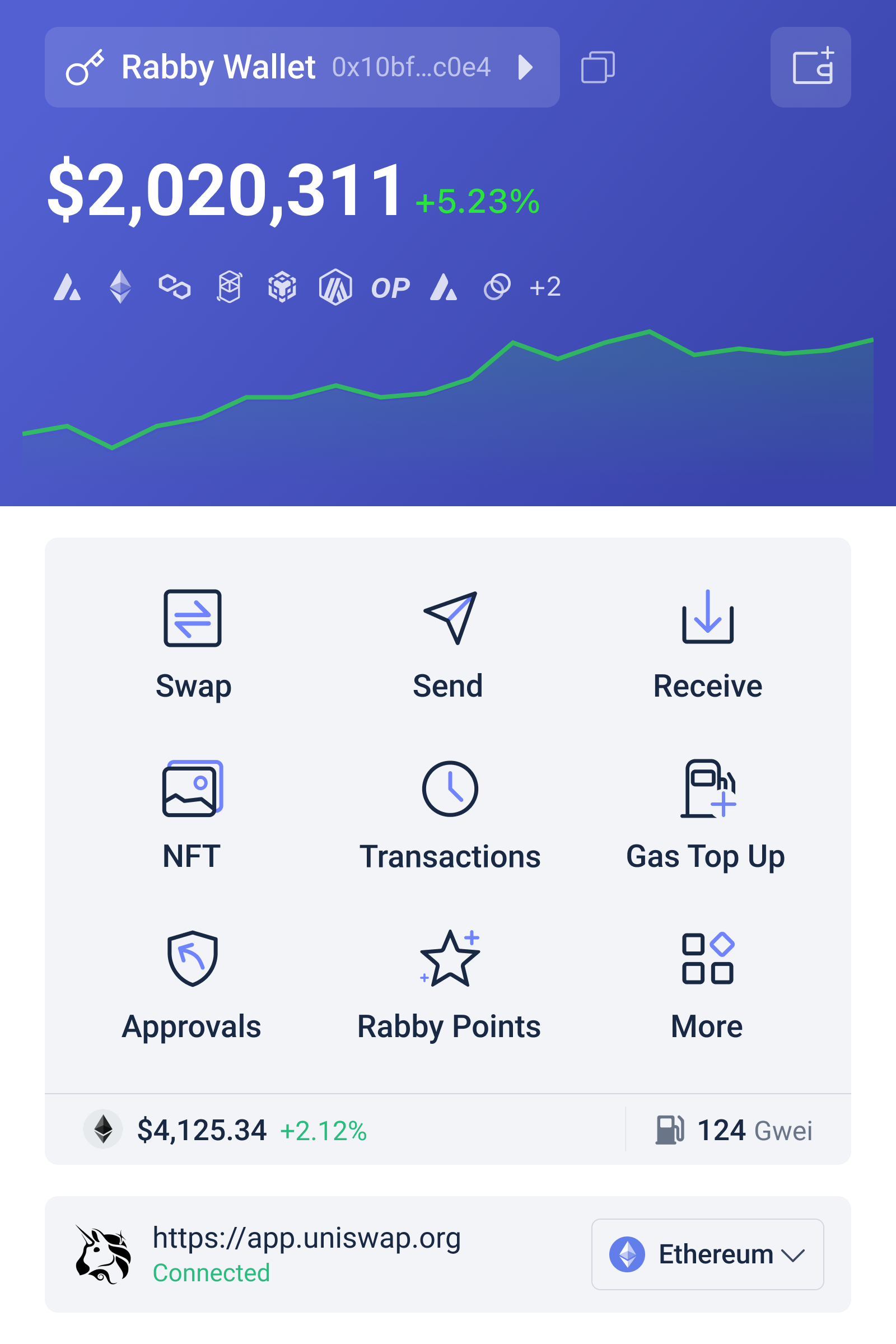
The recent positioning of Rabby Wallet emphasizes broad Ethereum and EVM coverage, extension access through browsers such as Chrome and Brave, and an on-chain experience centered on security and transaction understanding. For a reader comparing interfaces, rabby wallet is most relevant not as a promise that every risk disappears, but as an example of the design direction users increasingly expect: multi-chain access paired with simulation and warnings before a signature is authorized.
The meaningful evaluation questions are concrete. Does the wallet identify the network clearly? Does it explain balance changes rather than merely display raw calldata? Does it flag risky approvals? Does it simulate the transaction in a way that reflects the destination chain? Does it distinguish an expected failure from a suspicious result? Can the user review the final transaction rather than relying entirely on a website’s button label?
These questions also expose the boundary of wallet-based protection. Wallet software can improve human judgment at the signing boundary, where many attacks succeed through confusion or haste. It cannot guarantee application solvency, bridge safety, token legitimacy, governance integrity, or favorable execution under every market condition. Those risks require separate research and, in some cases, a decision not to transact.
What to watch next
The likely direction of multi-chain wallet design is greater contextual interpretation. As users move among more chains and applications, raw transaction data becomes less usable, while simulation results become more valuable. The difficult research problem is not simply producing more warnings. It is reducing false alarms while preserving sensitivity to genuinely dangerous behavior.
One signal to watch is whether wallets can explain uncertainty rather than hiding it. A mature interface might distinguish “this contract requests an unlimited allowance,” “the simulated output depends on current liquidity,” and “the transaction was sent through a private route with different delivery assumptions.” Those are different facts and should not be compressed into a single safety score.
If that distinction becomes standard, the wallet’s role will evolve from key manager to decision-support system. That would be useful, but it would also make transparency more important. Users need to know what was simulated, on which chain, under which state, and what the tool could not evaluate.
Frequently asked questions
Can a multi-chain wallet completely prevent MEV?
No. A wallet may reduce exposure through slippage controls, transaction simulation, private submission routes, or warnings about likely execution risks. MEV depends on network design, transaction visibility, liquidity, ordering rules, and application behavior, so no wallet can guarantee immunity in every case.
Does transaction simulation prove that a DeFi transaction is safe?
No. Simulation can reveal expected balance changes, permissions, and contract effects under particular conditions. It may not capture later market movements, changing external state, hidden economic risks, or future contract behavior. Treat it as a strong pre-signing aid, not a complete audit.
What is the most important habit for multi-chain users?
Confirm the chain, destination contract, assets involved, permissions requested, and expected balance changes before signing. When the transaction is difficult to explain in plain language, pause rather than assuming that a familiar interface or token symbol makes it safe.
The central lesson is deliberately modest: a wallet cannot make decentralized finance risk-free, but it can make risk more legible. In a multi-chain environment, that distinction is substantial. Better decisions begin when users stop asking whether a wallet is simply “safe” and start asking which risks it can identify, which it can reduce, and which still require judgment outside the signing window.